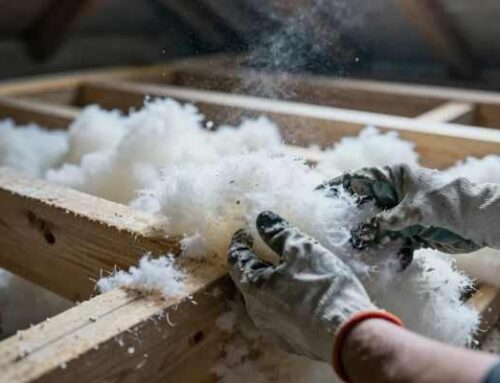
When it comes to reducing energy costs, homeowners often consider energy-efficient windows or solar panels first. However, there is another effective – and often forgotten – couple in use right above your head: roof insulation and ventilation.
Homeowners typically think about energy-efficient windows or solar panels before considering other highly effective – and often forgotten – options right above their heads: roof insulation and ventilation.
Roof insulation and ventilation act as the foundation’s energy performance. Insulation allows heat to stay put, while ventilation allows the attic and roof to be in sync and “breathe” the heat and moisture produced in that space.
Balancing insulation and ventilation systems will improve the stabilization of indoor temperatures, lowering your energy bills and prolonging the life of the roof system.
1. The Significance of Roof Insulation: Keeping the Inside Comfortable
Insulation is the primary way to prevent heat transfer between your home’s conditioned interior and the exterior. Or put it another way, in winter it prevents warm air from escaping and in summer it reduces the entry of heat into the house.
Here is what insulation does:
- Minimize heat transfer – Insulation materials, such as cellulose, fiberglass, or spray foams, are most effective when they have a lower thermal conductance, which allows for the slowest heat transfer through your ceiling.
- Lower energy bills – Overall, insulation is going to have the overall effect of a 15-20 percent reduction over the course of a year with your energy bills because they reduce the amount of heating or cooling used in your home.
- Ice dams are prevented – Insulation keeps the roof warm enough in the winter so that the snow melts evenly instead of freezing at the edge of the roof.
In short, when properly insulated, there will be a more stable indoor temperature year-round, and the energy cost of HVAC will be lowered, meaning more savings for you throughout the year you enjoy.
2. The Role of Roof Ventilation: Allowing the Roof to Breathe
The top layer of an insulated house does not let heat escape, but the roof that is well-ventilated still allows the hot and humid indoor air to be exhaled while achieving a sort of balance concerning the house’s whole internal climate. Proper ventilation systems with air intake vents (at the eaves) and exhaust vents (at the ridge) are permanently turning over air in the attic, thereby keeping it steady.
Good roof ventilation, among other things, has the following significant advantages:
- Temperature regulation: Prohibiting the very high step of warmer air in the attic, thus keeping the attic at around the outdoor temperature level.
- Moisture control: Minimizing condensation that is responsible for the growth of mold, mildew, and wood rot.
- Extended roof life: Giving time for the shingles, which otherwise would be overheating and deteriorating, to undergo the natural dying process.
- Energy efficiency: Insulation is effectively supported by ventilation with well-distributed airflow during seasonal shifts and thus energy cost reduction.
Lack of ventilation, in summer hot air is so much that it can raise the temperature of the attic to more than 150°F, thus making the air conditioning unit work harder and hence increasing electricity costs.
3. The Perfect Partnership: Why Insulation and Ventilation Must Work Together
Insulation and ventilation seem to be on two different sides of the coin; air is trapped in the case of the former, while in the latter, it’s released. However, when properly designed, they actually work together to produce an efficient and stable roof system.
Let us show you the benefits of their cooperation for your house:
Prevent the buildup of heat: Through ventilation, the heat that has been blocked is discharged, and through insulation, it is prevented from coming into the living zone.
Moisture is controlled: Heat will not get through ceilings with insulation, and on the other hand, the moisture created will be released by ventilation.
Energy efficiency is highest: They work in such a way that the temperatures in the attic and indoors are always equal, resulting in less pressure on the air conditioning.
4. Choosing the Right Materials and Systems
Contractors usually suggest the following to get the most out of energy efficiency:
- Fiberglass or cellulose insulation as the cheap option that performs well.
- Spray foam insulation as the best for air-sealing and moisture control.
- Ridge and soffit vents as the way to get constant airflow from eave to peak.
- Attic fans, either powered or solar, as a means to get more ventilation in hot areas.
If these materials are applied in the right order they will provide you with a balanced attic environment capable of summer cooling, winter warming, and for being dry throughout the year.
5. Long-Term Benefits: Comfort, Savings, and Sustainability
The insulation and ventilation of the roof are not only for personal comfort but also for long-term financial and environmental benefits. The homeowners are going to get:
- Cost savings by as much as 30% on their annual energy bill.
- Roof life extended, thereby lowering the cost on replacement.
- Better indoor air purity and humidity control.
- Lower carbon emissions, hence contributing to a green lifestyle.
In conclusion, it is a home upgrade that is financed through comfort and savings in money terms.
Final Thoughts: The Right Roof is a Better House
In the short run, the impact of roof insulation and ventilation may not be revealed, but each of the two is playing a role in an overall positive atmosphere in the house, lower utility bills, and a longer house life. The two together in the form of insulation and ventilation create an absolute energy saving scheme that is very effective to keep temperatures wanted, prevent damage, and reduce the process of energy consumption.
In case you have a new roof or are going to have one replaced, make sure to use insulation and ventilation, taking their collaboration into account. If your roof along with the house, is well insulated and properly ventilated, then the entire house can be efficient, comfortable, and sustainable as you desire.