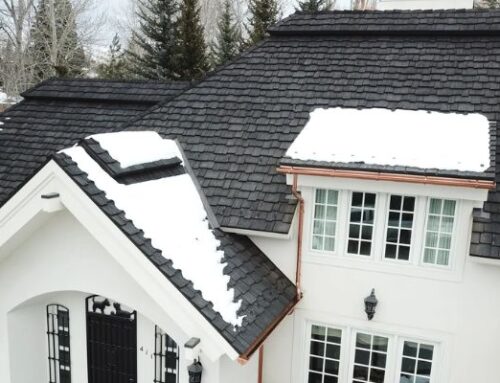
Your attic serves not only as a place for unwanted stuff, but it is a key thermal barrier that separates your heated living space from the bitter cold air outside. Heat can escape from your home through an improperly insulated or maintained attic around-the-clock, which means that you are literally wasting money as a result of heating your home! According to the U.S. Department of Energy, having properly insulated attics may save homeowners up to 15% on their utility costs by reducing those costs associated with heating and cooling the home.
Let’s take a look at some very common attic insulation mistakes that are contributing to your rising energy bills and provide recommendations on fixing them so you have improved insulation in your attic.
Mistake #1: Inadequate or Uneven Coverage
Problem:
Insulation only works when there is insulation coverage. Areas without coverage, thin spots, and gaps are known as “thermal bypasses”, which allow heated air to easily leave your attic. Older homes generally have insulation that does not meet today’s R-Value recommendations (the R-Value for attics in most cold climates is R-49 to R-60).
The Solution:
To Discover Your R-Value: To determine how much insulation you have in your home, measure the thickness of the insulation with a ruler. The R-Value for various types of insulation varies based on the type of material. For example, blown cellulose offers approximately R-3.5 for every inch of its thickness, and fiberglass batt offers R-3.2.
To Reach R-49 – To achieve R-49, you will typically need to add approximately 16 inches to 18 inches of either fiberglass or cellulose batt. The easiest and most efficient way to add insulation is to blow in additional cellulose over existing fiberglass batt insulation. Blown-in insulation will fill all voids, including corners and gaps, and will cover irregularly shaped areas as well.
Mistake #2: Compressing Insulation
What Is The Problem?
Insulation is designed to trap air in its fibers or cells, and therefore, creates a barrier to resist the passage of heat. When you place boxes on top of the batt insulation, or lay boards across the batt, or fill gaps with other materials, you compress the insulation, it greatly diminishes its ability to resist heat due to loss of air.
How This Affects You:
When a batt is compressed, as much as 50% of the effectiveness of the batt is lost.
Recommended Solution:
Always Raise Storage Above Insulation: If using the attic for storage, use a strong raised-platform floor constructed over the insulation, built from a framework of 2×4’s anchored to the joists, that leaves all the insulation below undisturbed.
Move Items to a Different Location: Another option would be to move items that are rarely used into a basement, shed, or garage closet.
Mistake #3 – No air sealing at light fixtures, plumbing pipes and electrical wiring
This is a huge issue. While insulation stops the transfer of heat, it does NOT stop the movement of air. If you just place insulation on top of an air leak, you are simply hiding the problem. Heated air in your home will continue to move through the air wherever it is allowed to escape.
Air leaks account for 30-40%! of your homes’ heat loss. Therefore, while your home may be insulated, without proper sealing of air leaks, the air leakage will still remove heat from those sections of your home. So the insulation you applied will be ineffective.
Fixing: Before sealing and insulating.
Using Caulk: For small gaps and cracks (less than ¼ inch) around framing.
Using Spray Foam: For larger gaps (around plumbing, wiring, chimneys).
Using Weatherstrip: To seal your attic access door or pull-down stairs.
Installing Box Covers: Use airtight covers (insulated if possible) over all recessed light fixtures that penetrate the ceiling.
Mistake #4 – Using the Wrong Type or Incorrectly Installing Batts
Problem :
Fiberglass batts are common but notoriously difficult to properly install. Common mistakes include:
- Leaving Gaps – Batts cut too short, leaving gaps between the edge of the batt and other surfaces.
- Not Filling The Cavity – Insulation is required to touch the drywall beneath it (in the case of a cathedral ceiling) and the roof sheathing above it.
- Incorrect Double Layering – The second layer of batts should be placed perpendicular to the first to provide coverage of seams.
- Cost – If a batt is installed improperly, it may carry an R-value of less than 50 percent of its rated R-value.
Solution:
There are a number of steps that need to be adhered to properly for batt insulation installation. To start with, the batt needs to be measured and cut to the exact size i.e. the size of the area where the studs are located. Never fold or squash the batt edges. Vacuum the area of the ceiling where the insulation meets the roof to ensure that no light can get through. Use safety gear (PPE) like gloves, respiratory masks, goggles, etc.
Mistake #5 Not Insulating the Attic Hatch & Knee Walls.
As a small and often overlooked access point, the attic hatch is a significant “weak link” in your energy envelope.
A missing hatch can contribute to energy loss just as much as several square feet of your insulated ceiling.
The Solution: Insulation for Attics
- Attic Hatch: Cover the attic hatch with rigid foam insulation, then seal the perimeter with weatherstrip.
- Pull Down Stairs: Build or buy an insulated cover box to go over the opening from underneath the attic.
- Knee Walls: Insulate and air seal the knee walls and cover with insulated covers over the side that is connected to the unconditioned attic.
A Winter Attic Insulation Action Plan
- Inspect: On a cool and sunny day, you should go outside to inspect your attic with a flashlight and a ruler.
- Seal: You should take caulk and spray foam to seal off any opening you can find.
- Check Vents: Make sure that the soffits have ventilation openings and that the baffling is in place.
Contact a professional if there is a need to add significant blown-in insulation, correct a large amount of blown-in insulation not installed properly, or any other major issues with blown-in insulation.
Conclusion
Resolving issues with attic insulation presents one of the largest returns on investment when it comes to home improvement projects. The materials used to address attic insulation mistakes are inexpensive compared to the savings on heating expenses associated with installing insulating materials correctly. Don’t waste your hard-earned money and effort that is used to generate heat this winter, as it is going up the chimney or out into the atmosphere. Create an insulated, well-sealed attic, and your home will keep all that warmth inside and have it available for your family to enjoy all winter long.